Capacitor Selection: Beyond Capacitance Values
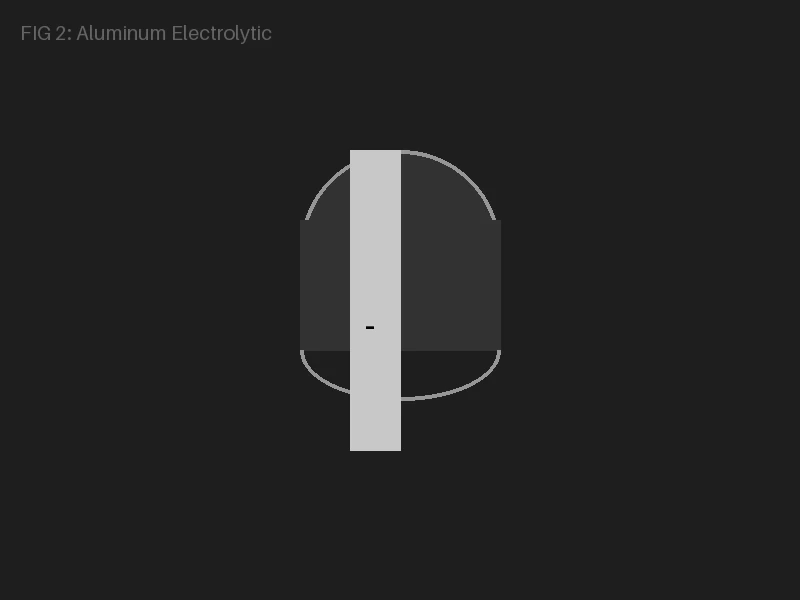
Selecting a capacitor requires more than matching the Farad value. Voltage rating, Equivalent Series Resistance (ESR), and dielectric absorption are critical.
Class II ceramic capacitors (like X7R and Y5V) exhibit significant DC bias effects. A 10µF 6.3V Y5V capacitor may lose 80% of its effective capacitance when biased at 5V, according to Murata's 2021 characterization data.
Key Specifications Data
| Dielectric | Stability | DC Bias Effect | ESR |
|---|---|---|---|
| C0G/NP0 | Excellent | None | Very Low |
| X7R | Moderate | Moderate | Low |
| Y5V | Poor | Severe | Low |
| Alum. Electrolytic | Poor (Temp dependent) | None | High |
Frequently Asked Questions
Why is my voltage rail oscillating?
High ESR in output filter capacitors can cause regulator instability. Check the datasheet for required minimum and maximum ESR.
Can I replace an electrolytic with a ceramic?
Yes, but due to the lower ESR of ceramics, linear voltage regulators might become unstable. Always check the regulator's stability curve.
Related Resources
- Understanding resistor specifications
- Selecting the right capacitor
- Diode forward voltage limits
- Bjt vs mosfet tradeoffs
- Applying ohm's law
- Kirchhoff's circuit laws
- Digi-key vs mouser comparison
- Custom pcb manufacturing
- Basic soldering techniques
- Multimeter troubleshooting
- Component selection guide
- Electronics theory fundamentals
- Circuit calculation tools
- Component sourcing strategies
- Practical electronics guides
- Institute for electronics homepage
- Resistor color code calculator
- Ohm's law calculator
- Voltage divider tool
- Pcb trace width calculator
- Led series resistor calculator